
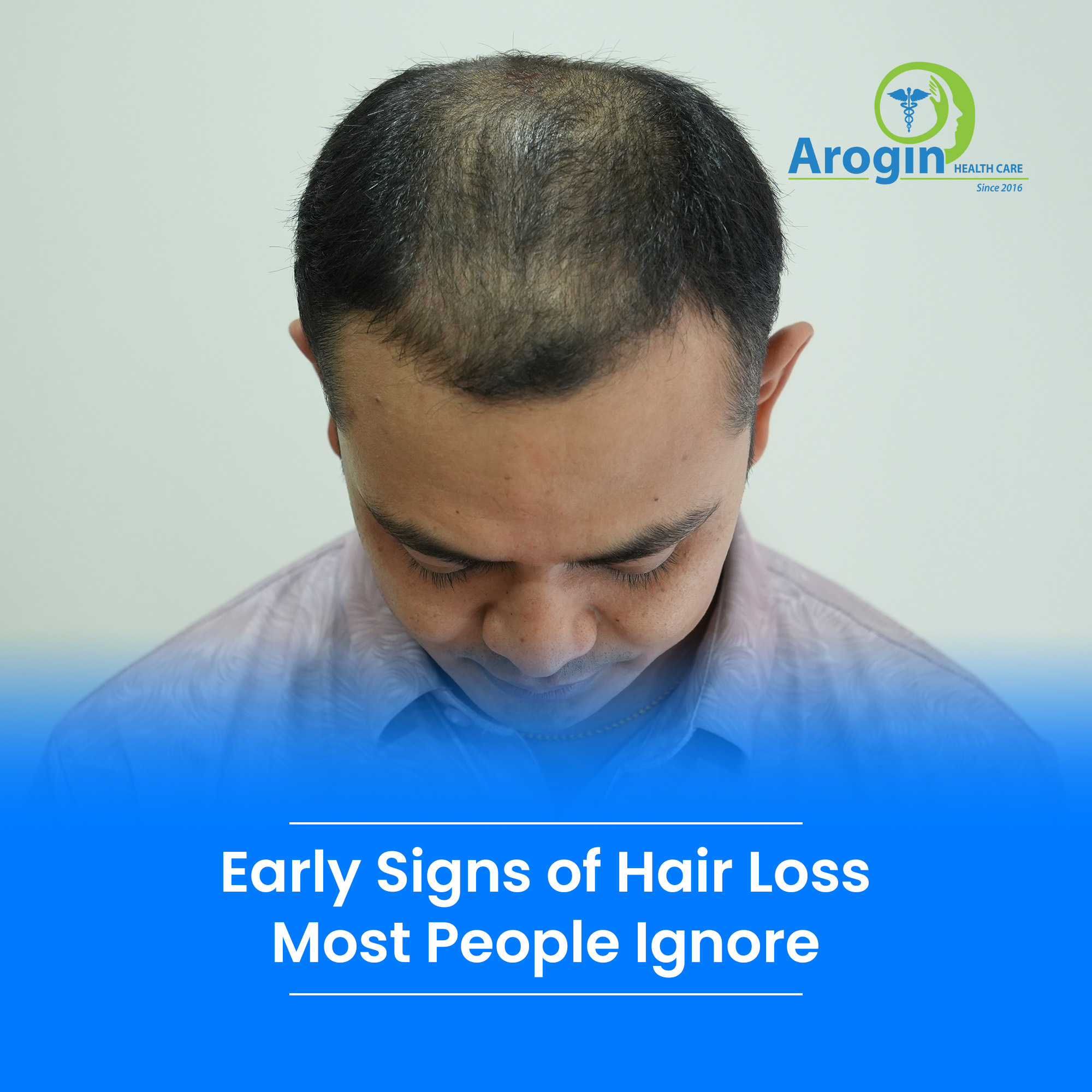
At Arogin Health Care, we have been studying hair loss patterns for over a decade. One sentence we hear again and again during consultations is, “I didn’t think it was serious at the beginning.” By the time hair loss becomes clearly visible, the process is often already well underway.
This page explains the early signs of hair loss, why they matter and when you should take action.
Why Early Hair Loss Detection Matters
Hair loss is usually progressive. When hair follicles weaken over a long period, natural regrowth becomes difficult without surgical treatment.
When hair loss is identified early, treatment options are wider. Existing hair can often be preserved. Density loss can be slowed. Results look more natural and in many cases, advanced procedures can be delayed or avoided.
Early attention gives you more control over your hair health.
Common Early Signs of Hair Loss You Should Not Ignore
Hair loss does not look the same for everyone. Some people notice shedding first, while others see thinning or changes in hair texture. Below are the most common early signs we see during real patient consultations.
Increased Hair Shedding Over Several Weeks
Some daily hair fall is normal. What matters is a noticeable increase that continues.
People often report:
- Hair on the pillow every morning
- More hair collecting in the shower drain
- Excess hair on the comb or hands while styling
If increased shedding lasts longer than four to six weeks, it should not be ignored. Persistent hair fall can be an early sign of genetic hair loss or stress-related shedding that needs proper evaluation.
Thinning Hair at the Crown Area
The crown is one of the most common starting points for hair loss and one of the most overlooked.
Early signs include the scalp becoming visible under strong light, hair lying flatter than before or difficulty styling the back of the head. Because this area is hard to see, many people notice it only after significant thinning has already occurred.
Gradual Receding Hairline
A slowly changing hairline is often dismissed as normal aging. However, uneven or rapid recession is not.
Warning signs include thinning temples, a deeper shape forming at the front hairline or one side receding faster than the other. A professional examination can easily distinguish between normal change and early pattern hair loss.
Hair Strands Becoming Finer
Hair loss does not always begin with hair falling out. In many cases, the hair becomes thinner first.
People notice reduced volume with the same haircut, hair feeling finer between the fingers or hair breaking more easily. This gradual thinning is common in genetic hair loss and can start years before visible bald spots appear.
Ongoing Scalp Problems
A healthy scalp is essential for healthy hair growth. Long-term scalp issues are often ignored or self-treated.
Persistent dandruff, itching, excess oil, redness or sensitivity can weaken hair roots over time. If scalp problems continue, they should be medically assessed rather than managed casually.
Hair Fall After Illness or Stress That Does Not Stop
Temporary hair shedding after illness or stress is common. The concern is when it continues for months.
Triggers may include serious illness, COVID-19, surgery, sudden weight changes or emotional stress. If hair fall lasts longer than three months, the hair growth cycle may need professional evaluation.
Family History of Hair Loss
Genetics play a major role in hair loss. Many people overlook this until thinning becomes obvious.
If close family members have hair loss and you notice early changes yourself, early care becomes especially important. In many cases, treatment can begin before visible hair loss appears.
Difficulty Styling Hair Like Before
This is a subtle but important sign.
People notice hair not holding volume, needing new hairstyles to hide thinning or using more products to achieve the same look. When styling habits change due to reduced density, hair loss has usually already started.
When Should You Consult a Hair Specialist?
You should consider a professional evaluation if hair fall continues beyond a month, thinning or recession is visible, hair loss runs in your family or you want to protect your hair rather than wait for visible loss.
At Arogin Health Care, early evaluation allows us to guide patients toward medical treatment, scalp care or long-term planning before hair loss becomes advanced.
Early Action Leads to Better Hair Outcomes
The most common regret we hear from patients is waiting too long. Modern hair loss treatment works best when started early.
Hair loss is not just cosmetic. It is a medical process. And when it comes to hair loss, early attention truly changes the outcome.