
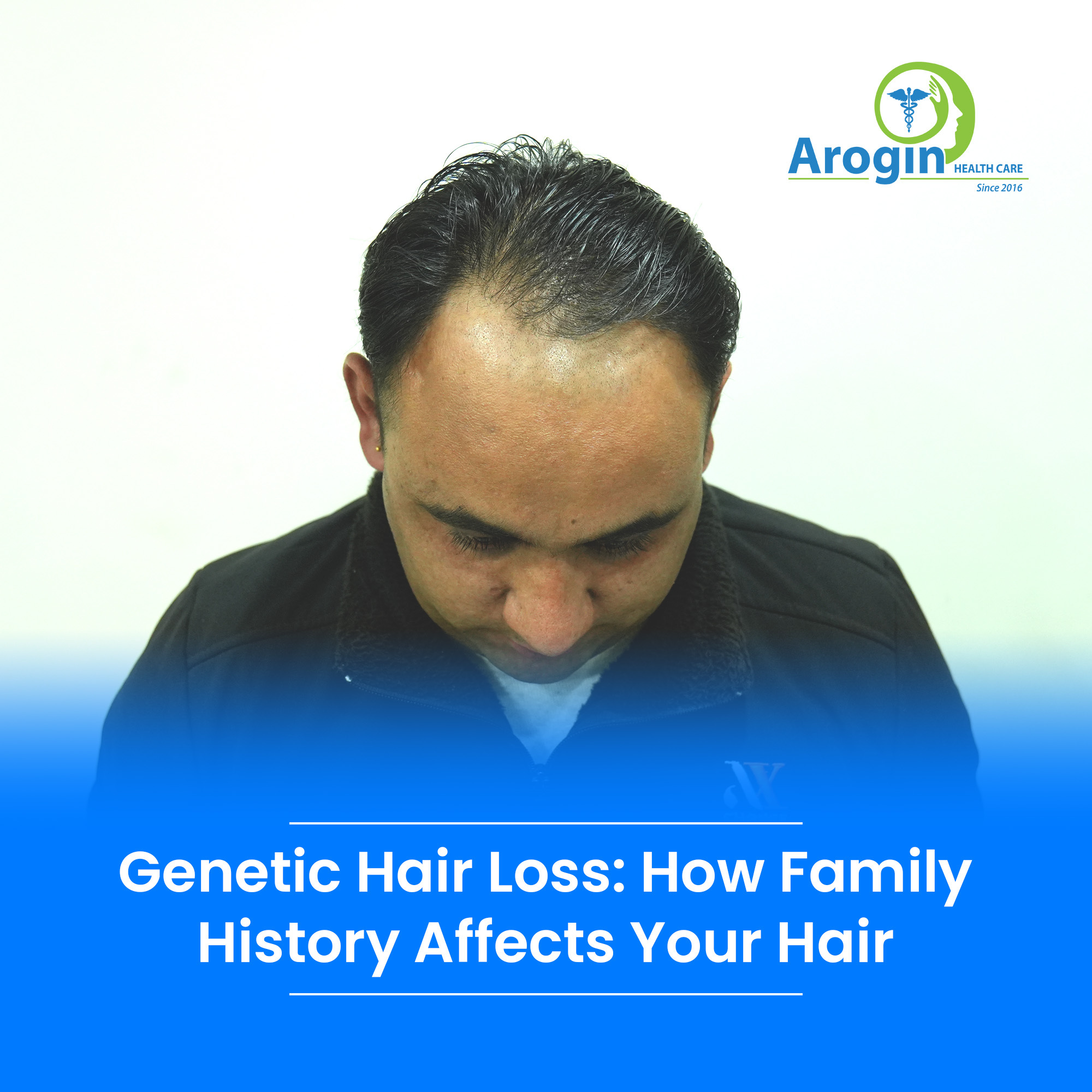
At Arogin Health Care, we have been assessing hair loss patterns for more than a decade. One of the most common things we hear is, “Hair loss runs in my family but I thought it wouldn’t affect me.” In reality, family history plays a major role in how, when and where hair loss appears.
Understanding genetic hair loss early helps you protect existing hair and plan treatment more effectively.
What Is Genetic Hair Loss?
Genetic hair loss also known as androgenetic alopecia is a hereditary condition. It affects both men and women although the pattern and speed can differ.
This type of hair loss happens when hair follicles become sensitive to a hormone called DHT. Over time affected follicles produce thinner hair, grow for shorter periods and eventually stop producing visible hair.
Because the condition is genetic, it usually progresses unless managed early.
How Family History Influences Hair Loss
Hair loss genes can come from either side of the family. It is not limited to one parent or gender line.
If close family members experienced early thinning, receding hairlines or crown baldness, your risk is higher. The age at which hair loss starts, the pattern it follows and how fast it progresses are often similar within families.
Family history does not mean hair loss is guaranteed but it does mean early monitoring becomes important.
Early Signs of Genetic Hair Loss
Genetic hair loss often starts subtly. Many people miss the early signs because hair is still present.
Common early signs include:
- Gradual thinning at the crown
- Receding hairline at the temples
- Hair strands becoming finer
- Reduced volume while styling
- Scalp becoming more visible under light
These changes may begin years before obvious bald spots appear.
Why Genetic Hair Loss Progresses Over Time
Genetic hair loss is a gradual process. Hair follicles slowly weaken with each growth cycle.
Without early care, follicles can become permanently inactive. At that stage, non-surgical options are less effective and hair transplant may be required to restore density.
Early management helps slow this progression and preserve existing hair.
Can Genetic Hair Loss Be Prevented?
Genetic hair loss cannot be completely prevented but it can often be managed effectively.
Early medical treatment, scalp care and regular monitoring can help slow hair thinning and maintain natural coverage for longer periods. The goal is not just regrowth but long-term preservation.
The earlier care begins, the better the results tend to be.
When Should You Seek Professional Advice?
If hair loss runs in your family and you notice early changes, professional evaluation should not be delayed.
You should consider consultation if:
- You see thinning or recession starting
- Hair density is reducing over time
- Family members experienced early hair loss
- You want to protect existing hair
At Arogin Health Care, we focus on early assessment and honest guidance based on your individual hair pattern.
Planning Hair Loss Care Based on Genetics
Genetic hair loss requires long-term thinking. Treatment plans should consider future hair loss, not just current appearance.
Whether care involves medical treatment, non-surgical support or hair transplant planning, decisions are best made early. Proper planning helps achieve natural-looking and stable results over time.
Understanding Your Hair Loss Early Makes a Difference
Genetic hair loss does not happen overnight. It follows a pattern and that pattern can often be recognized early.
With timely attention and the right guidance, many people are able to slow hair loss and maintain confidence for years.
At Arogin Health Care, experience guides every recommendation, because with genetic hair loss, early understanding changes everything.