
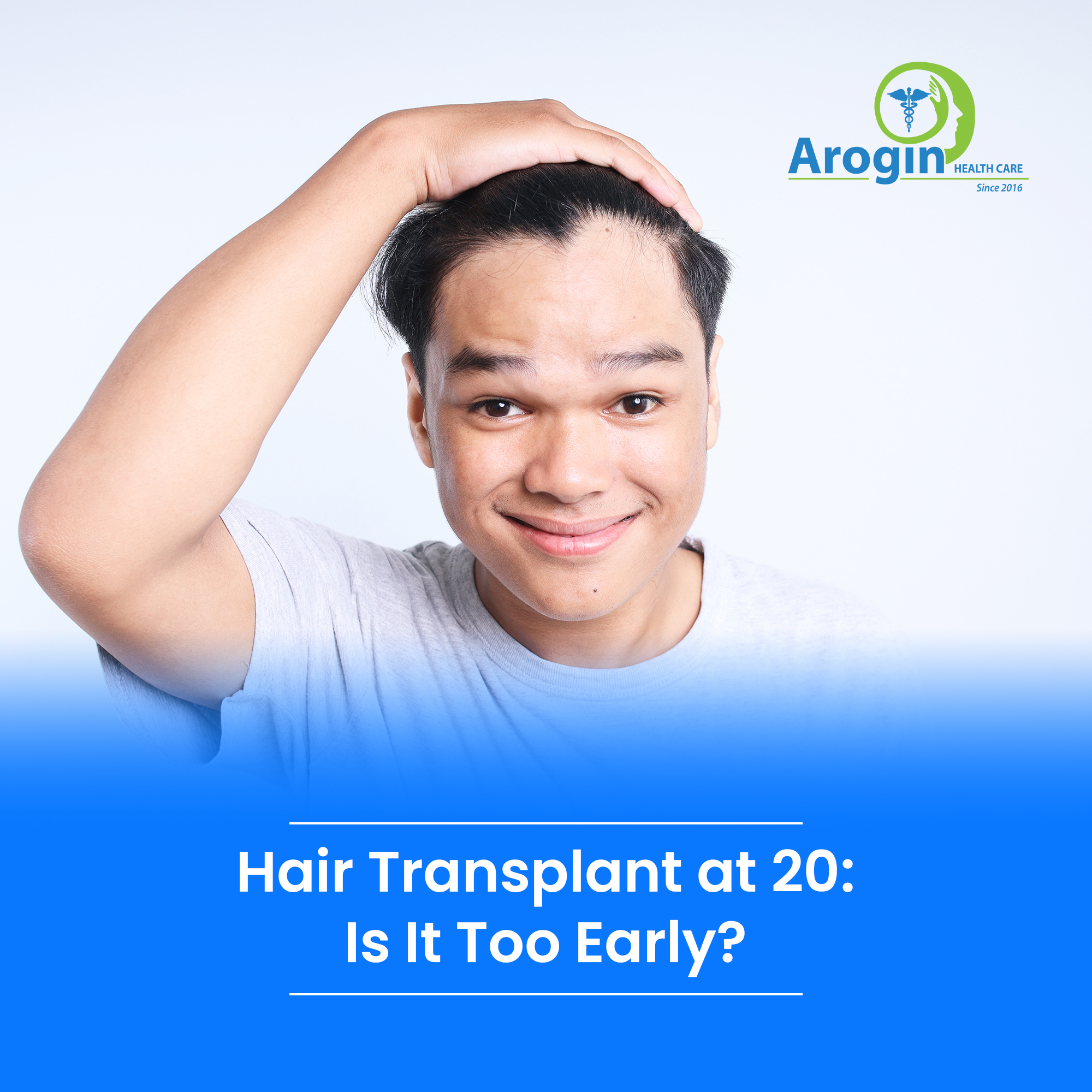
At Arogin Healthcare in Kathmandu, Nepal, hair transplant decisions are based on medical evaluation, not age-based assumptions.
Hair Loss in Your Early 20s: What’s Really Happening?
Hair loss at 20 is most commonly caused by androgenetic alopecia, also known as male pattern baldness. This condition is genetic and progressive, meaning it continues over time. In some cases, hair fall may also be linked to stress, nutritional deficiencies, hormonal issues or medical conditions.
This distinction is important. Not all hair loss needs surgery. Treating the cause early can sometimes slow or control further loss.
How a Hair Transplant Works
A hair transplant involves extracting healthy follicles from the donor area, usually the back or sides of the scalp and implanting them into thinning or bald areas. These transplanted follicles are resistant to DHT and continue to grow permanently.
However, the donor area has a limited supply. Using it wisely is critical, especially for younger patients who may continue losing native hair over time.
Is a Hair Transplant at 20 a Good Idea?
A hair transplant at 20 can be appropriate in selected cases but there are important factors to consider.
Ongoing Hair Loss
At this age, hair loss patterns are often still developing. If surgery is done too early, additional procedures may be needed later as surrounding hair continues to thin.
Hairline Maturation
Hairlines naturally change with age. Designing a very low or dense hairline at 20 can look unnatural later if recession progresses. A conservative, age-appropriate plan is essential.
Correct Diagnosis Comes First
If hair loss is due to temporary or treatable causes, surgery should be postponed. Medical treatment or lifestyle correction may be enough.
Medical Management Before Surgery
Treatments such as finasteride and minoxidil are often recommended to stabilize hair loss before considering a transplant. These options help preserve existing hair and improve long-term results.
Permanent Nature of Transplant Hair
Transplanted hair remains for life but untreated native hair may continue to fall. Planning must account for future loss to avoid uneven density.
Hair Transplant in Kathmandu, Nepal: Why Arogin Healthcare
Arogin Healthcare is recognized for its careful, medically guided approach to hair restoration.
Detailed Consultation
Every patient undergoes scalp analysis, donor assessment and long-term planning before surgery is considered. This is especially important for younger patients.
Advanced Techniques
Arogin Healthcare offers advanced FUE-based methods, including its patented B.E.S.T. (Bio Enhanced Simultaneous Transplant) technique, designed to support graft survival and natural growth.
Ethical Patient Selection
Not every 20-year-old is advised to undergo a transplant. If surgery is not the right step, medical treatment and monitoring are recommended instead.
Post-Procedure Follow-Up
Structured follow-up and guidance help patients maintain results and protect remaining hair.
Conclusion
A hair transplant at 20 is not automatically too early but it should never be rushed. The decision must be based on hair loss stability, donor strength, family history and long-term planning. When done without proper evaluation, early surgery can create problems later.
If you are experiencing hair loss at a young age and want honest, medically sound advice, consult the specialists at Arogin Healthcare, Kathmandu, Nepal. The right decision today protects your results for years to come.