
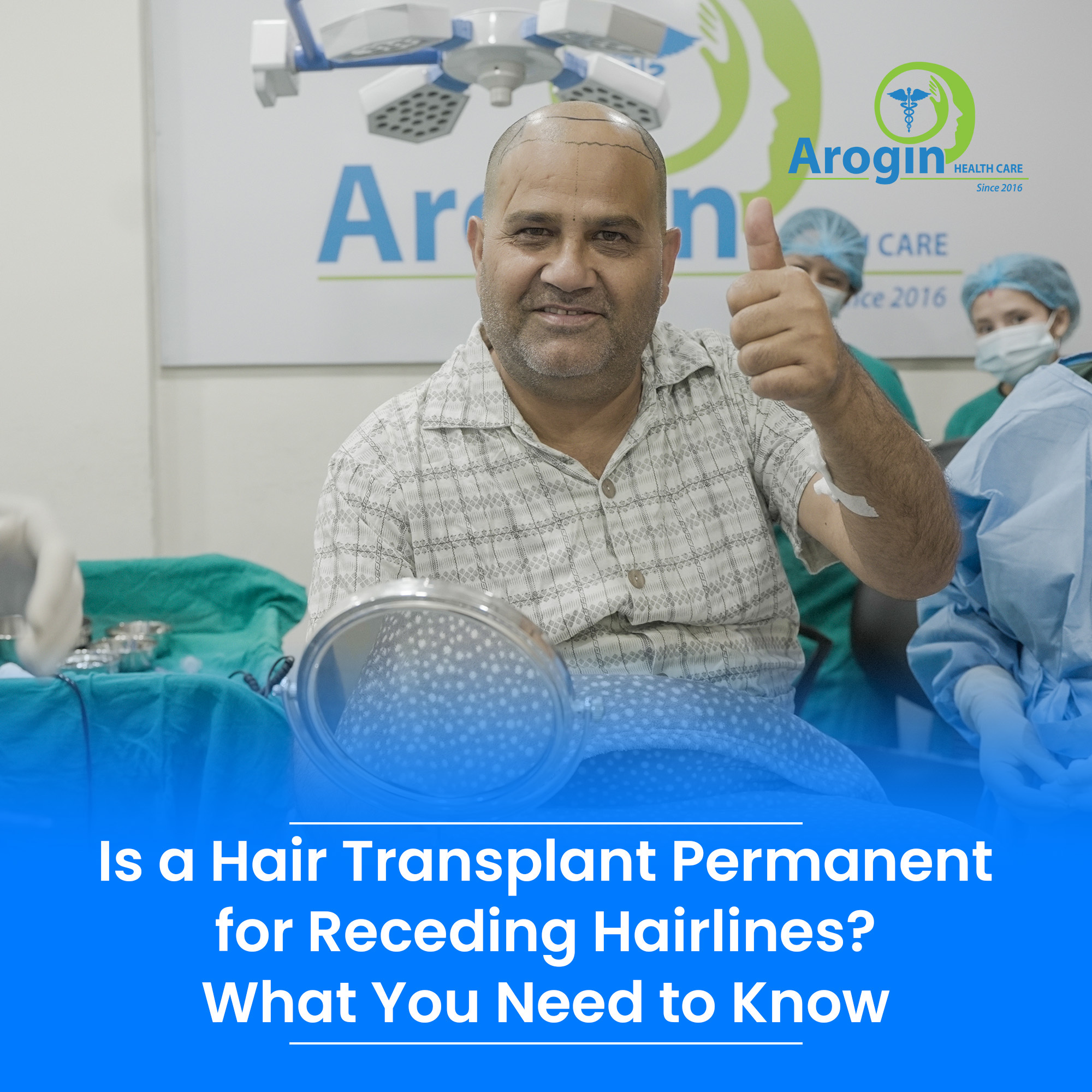
The medically honest answer is yes, a hair transplant is permanent, when it is planned and performed correctly. The permanence is not a marketing claim. It is based on genetics and surgical science.
Why Hairlines Recede in the First Place
Most receding hairlines are caused by androgenetic alopecia, commonly known as male pattern baldness. The driving force behind this condition is dihydrotestosterone, or DHT.
Hair follicles at the front of the scalp are genetically sensitive to DHT. Over time, this hormone causes them to shrink, weaken, and eventually stop producing hair. This is why recession follows a predictable pattern at the temples and hairline.
In contrast, the hair at the back and sides of the scalp behaves very differently.
The Genetic Reason Hair Transplants Last
The donor area, usually the back and sides of the head, contains follicles that are genetically resistant to DHT. These follicles are not affected by the hormone that causes hairline recession.
During a hair transplant, follicles are moved from this resistant donor area to the receding hairline. Their genetic behavior does not change. This principle is known as donor dominance.
In simple terms, transplanted hair keeps the characteristics of where it came from, not where it is placed. Once these DHT-resistant follicles are implanted into the hairline, they continue to grow normally for life.
That is why, from a biological standpoint, transplanted hair is permanent.
Why Some Hair Transplants Still Look Like Failures Years Later
When people see poor long-term results, the problem is rarely that the transplanted hair fell out. The issue is usually what happened around it.
Your original, native hair is still genetically sensitive to DHT. If this hair continues to thin and fall, it can create an unnatural appearance if the transplant was not planned with the future in mind.
Poor planning can lead to a dense, permanent hairline sitting in front of thinning or bald areas. This “island” effect is one of the most common regrets after a poorly designed transplant.
The solution is foresight.
An experienced clinic designs a conservative, age-appropriate hairline and discusses medical treatment options to slow further loss of native hair. Protecting existing hair is just as important as transplanting new follicles.
Factors That Affect Long-Term Permanence
Even though transplanted hair is genetically permanent, the quality of the result depends on how the procedure is performed.
Graft survival is critical.
Hair follicles are living tissue. If they are mishandled, kept outside the body too long, or damaged during extraction or implantation, they may never grow properly. Advanced techniques that minimize graft handling time significantly improve survival rates.
Donor area management matters.
The donor area is a limited resource. Overharvesting to achieve short-term density can permanently damage future options. Ethical surgeons protect the donor area to ensure natural results today and flexibility tomorrow.
At Arogin Healthcare, donor safety and long-term planning are non-negotiable principles.
Conclusion
A hair transplant for a receding hairline is a permanent solution by genetic design. Transplanted hair does not fall out due to DHT and will not recede again.
However, permanence only holds value when paired with intelligent planning. A successful transplant is not just about filling a gap today. It is about creating a hairline that will still look natural ten, twenty, or thirty years from now.
Choosing the right clinic makes the difference between a lifelong solution and a lifelong regret.
At Arogin Healthcare, Kathmandu, Nepal, hairline restoration is approached as a long-term medical decision, not a cosmetic shortcut. When done correctly, a hair transplant does not just restore hair. It restores confidence in a way that lasts.