
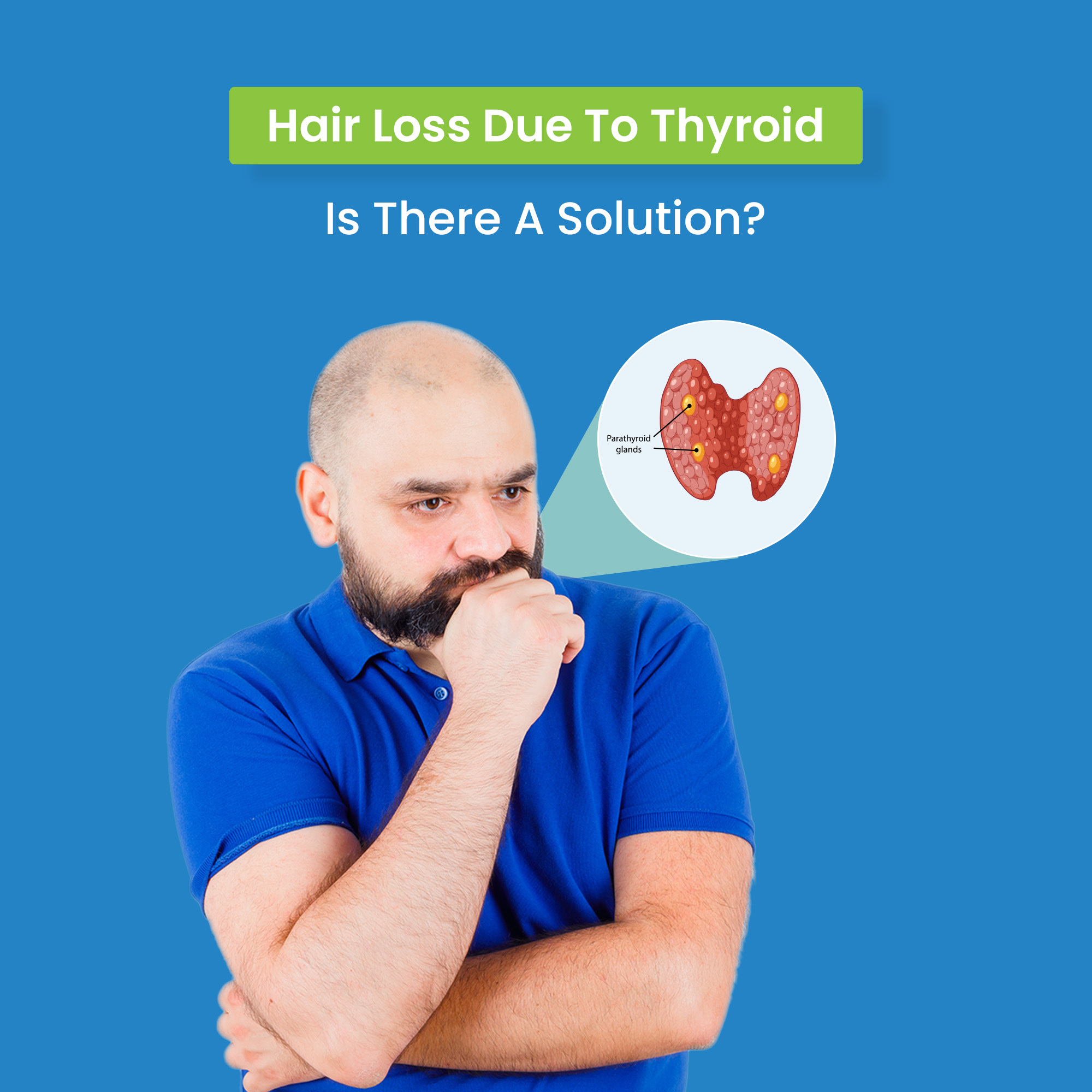
Whether you’ve just noticed unusual hair shedding or have been dealing with thyroid for years, this article will give you clarity and direction.
How the Thyroid Affects Hair Growth
Hair does not grow constantly in one stretch. Instead, it follows a natural cycle consisting of development, transition, rest, and shedding stages. A functioning thyroid gland generates hormones that regulate this cycle and ensure that new hairs replace those shed.
When the thyroid is underactive (hypothyroidism) or hyperactive (hyperthyroidism), this equilibrium is upset. The growth phase shortens, and a higher number of hairs reach the resting phase simultaneously. As a result, you may have excessive shedding, thinning, and delayed regeneration. Unlike hereditary baldness, which often affects particular regions such as the crown or temples, thyroid-related hair loss frequently manifests as thinning throughout the scalp. In some cases, it can also damage brows, eyelashes, and body hair.
What Thyroid-Linked Hair Loss Looks Like
One of the most common queries people have is, "How do I know if my hair loss is due to thyroid problems or something else?" The pattern of loss provides vital indications. Thyroid-related shedding normally does not result in bald patches. Instead, hair gets considerably thinner over the scalp. Some people notice that their hair texture changes – it may become especially dry and rough or harsh in hypothyroidism, or soft and fine in hyperthyroidism.
Another indicator is timing. Hair loss usually begins months after thyroid difficulties begin, rather than immediately. Many patients only notice when clumps of hair fall out while brushing or washing. If you suffer additional thyroid-related symptoms such as exhaustion, unexpected weight fluctuations, mood swings, or dry skin, it becomes much more likely that the two are related.
Can Hair Grow Back After Thyroid Treatment?
The good news is that thyroid-related hair loss is often transient. Hair growth frequently returns on its own when your thyroid hormone levels are restored to balance with the proper medical therapy. However, recuperation does not occur instantly. It may take several months for shedding to subside and new growth to emerge. In certain circumstances, complete healing may take up to a year.
Unfortunately, not everyone recovers all of their lost hair. If the thyroid imbalance is severe or has been neglected for an extended period of time, the hair follicles may become too weak to properly heal. This occurs when people continue to have chronic thinning even after their thyroid problem is addressed.
Managing Hair Loss from Thyroid Imbalance
The first and most crucial step in treating thyroid-related hair loss is to address the underlying thyroid condition. Without hormonal balance, hair treatments will be ineffective. Once your thyroid is under control, there are numerous strategies to help and speed up hair recovery.
A well-balanced diet rich in protein, iron, vitamin D, and zinc gives your hair with the building blocks it requires to flourish. Gentle hair care measures, such as avoiding excessive heat styling, harsh chemicals, or tight hairstyles, can prevent further damage to delicate strands.
For patients who want faster results or whose regrowth is limited, medical hair therapies are often recommended. At Arogin Health Care, we provide treatments such as PRP (Platelet-Rich Plasma) therapy and GFC (Growth Factor Concentrate) therapy, both of which use the body’s own growth factors to stimulate weak follicles and promote thicker, healthier hair.
For those with long-standing or irreversible thinning, a hair transplant can offer a permanent solution. Our B.E.S.T. (Bio-Enhanced Simultaneous Transplant) technique — a patented and advanced method available exclusively at Arogin we ensure natural, dense results with minimal downtime.
When to Seek Help
It is normal to shed some hair every day, but if you notice that your hair is thinning rapidly, if your eyebrows or eyelashes are also falling out, or if your hair loss continues even after thyroid treatment, it may be time to consult a specialist. Hair loss can affect confidence and emotional well-being just as much as appearance, and seeking help early often leads to better outcomes.
At Arogin Health Care, our team specializes in identifying the root causes of hair loss and tailoring treatments to suit each patient’s needs. Whether your shedding is temporary due to thyroid imbalance or requires advanced restoration, we provide solutions that bring both medical expertise and cosmetic artistry together.
Conclusion
Thyroid imbalance is a common but often misunderstood cause of hair loss. While the shedding often improves once thyroid levels are stabilized, some people experience lingering thinning that requires additional care. The good news is that with the right combination of medical treatment and advanced hair restoration techniques, it is possible to regain not only your hair but also your confidence.
If you are struggling with thyroid-related hair loss in Nepal, visit Arogin Health Care Nepal’s leading center for hair transplant and advanced hair loss treatment.